SMART-1
SMART-1 was ESA's first lunar mission. Using a PPS-1350 Hall-effect ion engine consuming only 82 kg of xenon gas, it spiraled outward from Earth orbit over 14 months to enter lunar orbit in November 2004. In orbit, it performed X-ray fluorescence mapping of key chemical elements (calcium, silicon, aluminum, iron), photographed polar illumination sites, and ended with a planned grazing impact into Lacus Excellentiae on September 3, 2006, observed in real-time by Earth telescopes.
Mission Imagery & Gallery
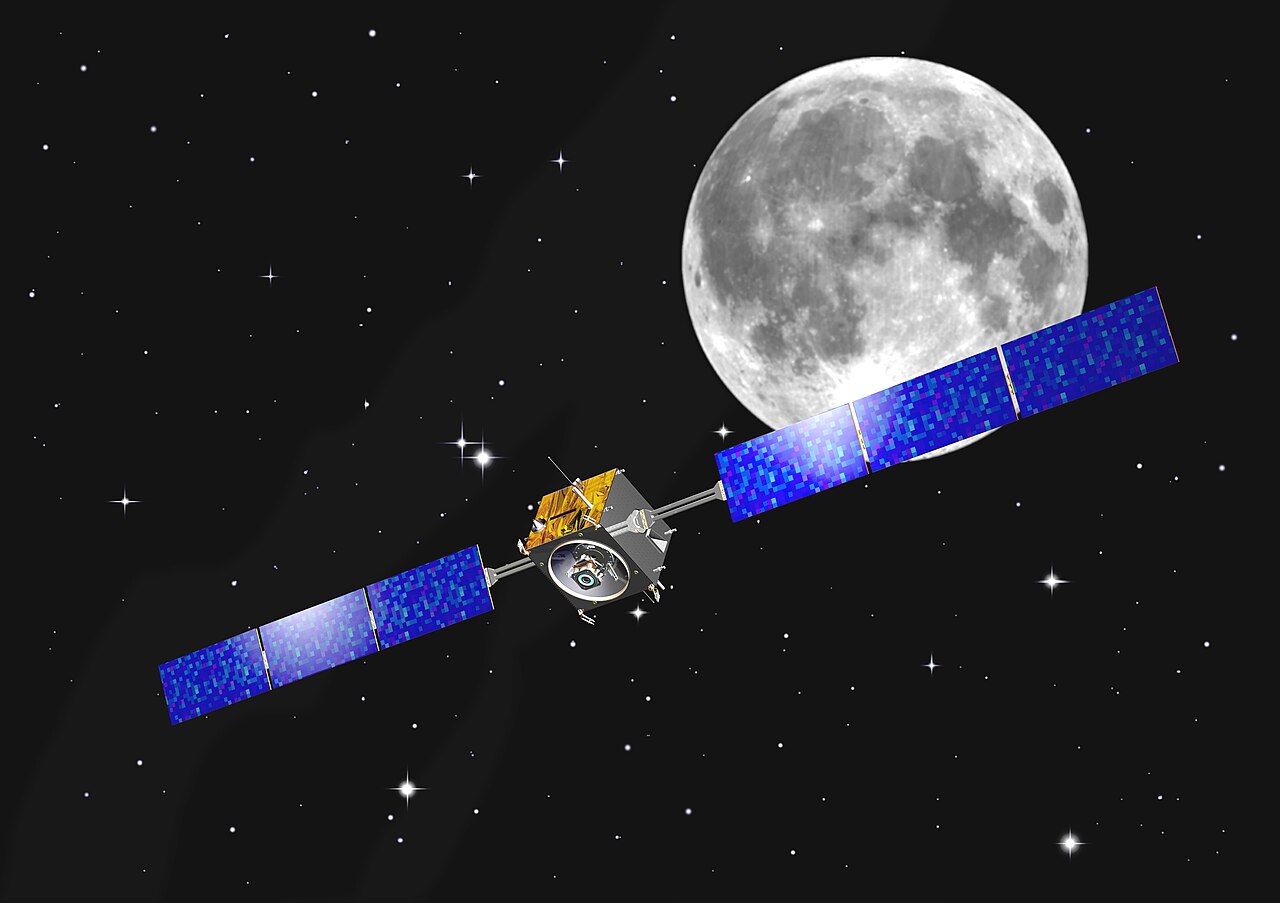
Primary Achievement
First European Space Agency mission to the Moon; pioneered primary solar-electric ion propulsion for lunar spiral transfer.
Mission Objectives
- Test and validate solar-electric propulsion (ion engine) for deep space voyages
- Perform elemental mapping of lunar crust with D-CIXS compact X-ray spectrometer
- Map polar lighting conditions to identify peaks of eternal light for future bases
Timeline Events
- 2003-09-27 — Launched from Kourou, French Guiana aboard Ariane 5 as an auxiliary payload.
- 2004-11-15 — Captured by lunar gravity at Moon L1 point after spiraling 84 million km using ion thrust.
- 2005-02-28 — Achieved final operational elliptical polar science orbit (300 x 3,000 km).
- 2006-09-03 — Commanded grazing impact into Lacus Excellentiae at 05:42:22 UTC at 2 km/s, observed by CFHT.
Related Missions
- Hiten (MUSES-A) (1990) · ISAS / JAXA
- Kaguya (SELENE) (2007) · JAXA
- Chandrayaan-1 (2008) · ISRO
Historical & Technical Sources
Ready to view SMART-1 in 3D?
Interactive 3D Moon viewer with exact site coordinates, sun position, and surrounding topography.
🚀 View SMART-1 on 3D Moon