Peregrine Mission 1
Peregrine Mission 1 was the inaugural launch of NASA's Commercial Lunar Payload Services (CLPS) initiative, flying aboard the maiden launch of the ULA Vulcan Centaur rocket on January 8, 2024. Shortly after spacecraft separation, a valve failure caused helium overpressurization and ruptured an oxidizer tank, creating a severe propellant leak. Astrobotic stabilized the spacecraft with attitude thrusters, powering and collecting data from all active NASA and commercial payloads for over 10 days before safely directing it into Earth's upper atmosphere over the South Pacific on January 18.
Mission Imagery & Gallery
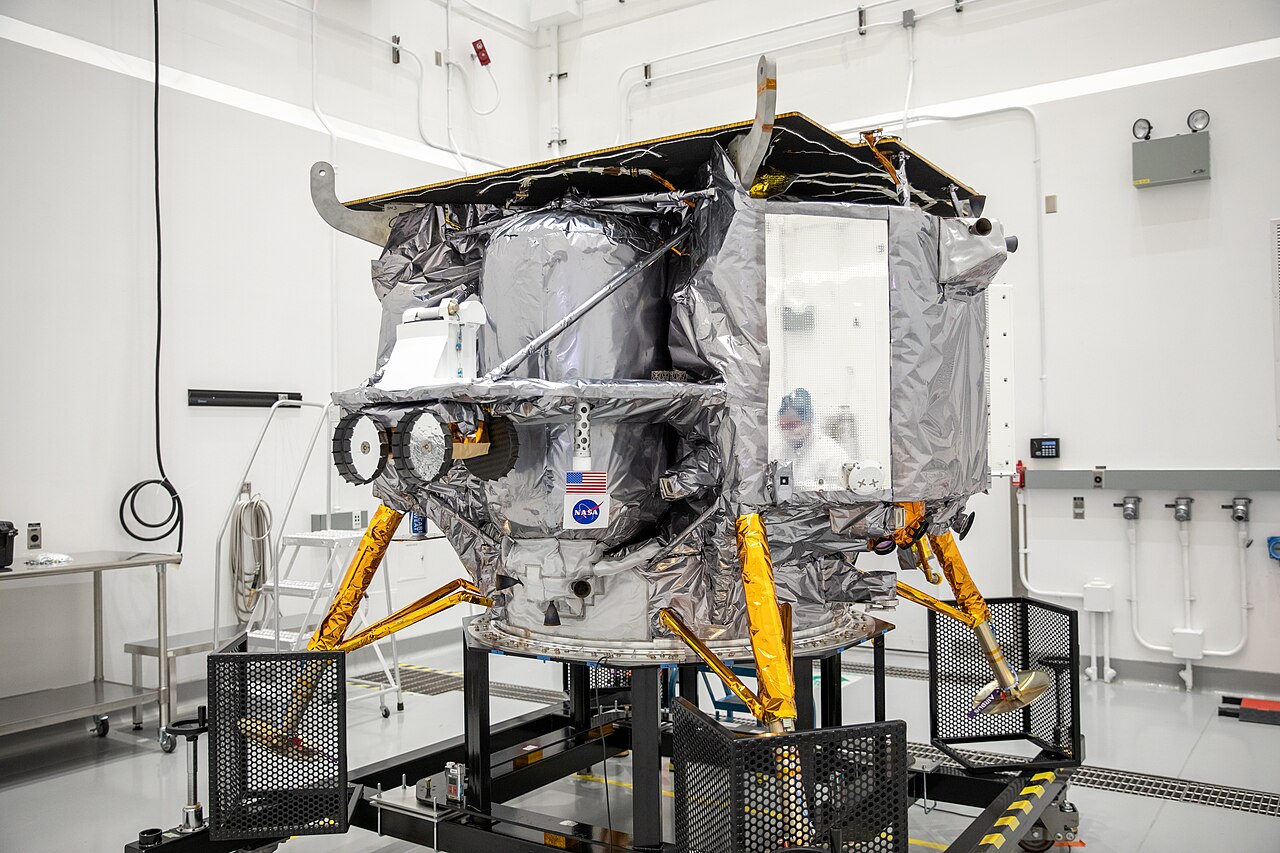
Primary Achievement
First mission of NASA's CLPS program; operated 5 NASA science payloads in cislunar space after propulsion failure aborted landing.
Mission Objectives
- Target soft landing at Gruithuisen Domes (Sinus Iridum / Oceanus Procellarum boundary)
- Operate 5 NASA CLPS instruments to study lunar exosphere, volatiles, and surface radiation
- Deploy commercial micro-rovers and international cultural payloads
Timeline Events
- 2024-01-08 — Launched from Cape Canaveral SLC-41 aboard the maiden flight of the Vulcan Centaur rocket.
- 2024-01-08 — Propulsion oxidizer tank rupture detected shortly after separation, ruling out a lunar landing attempt.
- 2024-01-11 — All 10 powered payloads successfully activated and returned science measurements from cislunar space.
- 2024-01-18 — Controlled destructive atmospheric reentry over the South Pacific Ocean at 20:59 UTC.
Related Missions
- IM-1 Odysseus (2024) · Intuitive Machines
- Blue Ghost (Firefly Aerospace) (2025) · Firefly Aerospace
- IM-2 Athena (2025) · Intuitive Machines
- Chandrayaan-2 (2019) · ISRO — Vikram lander's hard impact on the south pole is a direct historical parallel to Peregrine's propulsion-failure abort
- Luna 25 (2023) · Russia — crashed before landing during the same commercial lunar rush era, highlighting the difficulty of a first soft landing
- Beresheet (2019) · SpaceIL — earlier commercial landing attempt that also crashed, paving the way for CLPS missions like Peregrine
Historical & Technical Sources
Ready to view Peregrine Mission 1 in 3D?
Interactive 3D Moon viewer with exact site coordinates, sun position, and surrounding topography.
🚀 View Peregrine Mission 1 on 3D Moon